Signs It's Time to Repaint Your House Exterior
Your home's exterior tells you when it needs repainting — you just have to know what to look for. Here are the warning signs that mean it's time to repaint before small problems become expensive repairs.
Rather than guessing based on age, learn to read the signs your home's exterior is giving you. Catching paint failure early protects the siding and trim underneath, which is far cheaper than repairing water-damaged wood. Here's what to watch for.
Peeling, Blistering, and Flaking
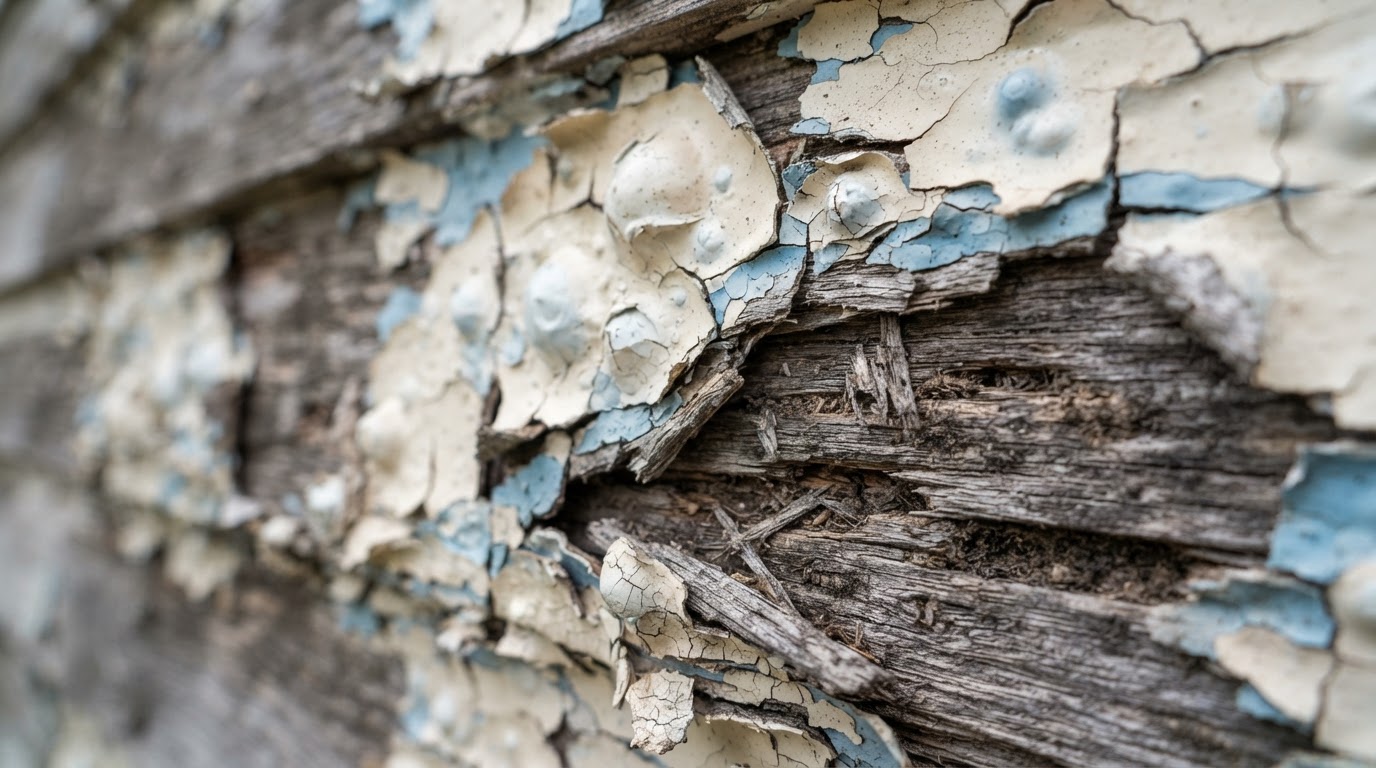
Paint that's peeling, blistering, or flaking is the most obvious sign. It means the coating has lost adhesion — often due to moisture, poor prep, or age. Once paint starts coming off, the exposed surface beneath is vulnerable to damage. Address it before it spreads.
Cracking and Alligatoring
Small cracks in the paint — sometimes forming a pattern that looks like reptile skin, called alligatoring — indicate the paint is aging and losing flexibility. These cracks let moisture in, which accelerates the failure. It's a sign the coating is at the end of its life.
Fading
Color fading, especially on sun-facing walls, is normal over time — but significant fading means the paint's UV protection is breaking down. In a sun-heavy climate like DFW, south- and west-facing walls fade first. Fading itself isn't urgent, but it often accompanies other signs of breakdown.
Chalking
If you rub your hand across the paint and a powdery residue comes off, that's chalking. It's a sign the paint is breaking down at the surface. Mild chalking is normal as paint ages, but heavy chalking means the coating is deteriorating and nearing the end of its protective life.
Seeing These Signs on Your Home?
An experienced painter can assess whether it's time to repaint or if there's life left. Get an honest assessment from Paint the Town — 31 years of industry experience.
Exposed Substrate or Bare Wood
If you can see bare wood, siding, or substrate, that area is unprotected. Bare wood absorbs moisture, which leads to rot — a far more expensive problem than paint. Any exposed substrate should be addressed promptly.
Failed Caulk
Caulk around windows, doors, and trim shrinks and cracks over time. When caulk fails, water gets behind the paint and siding — one of the most common causes of hidden damage. Check the caulk lines; if they're cracked or pulling away, it's time to address them, often as part of repainting.
Moisture Warning Signs
Soft spots in siding, water stains, or paint bubbling (where moisture has pushed the coating away from the surface) are serious signs. These indicate water is getting behind the paint, which means the underlying structure may be at risk. Investigate moisture issues promptly — they don't resolve on their own.
When to Act
If you notice one minor sign on a single wall, you may have time. If you're seeing multiple signs across several walls — especially peeling, exposed substrate, or moisture — it's time to plan a repaint. Waiting turns a painting project into a repair project.
An annual walk-around of your exterior, especially after summer, is the best way to catch these signs early. When in doubt, have an experienced painter take a look.
Frequently Asked Questions
How do I know if it's just fading or a real problem?
Fading alone is cosmetic, but fading often accompanies chalking and cracking. Rub the surface — if powder comes off, the paint is breaking down. If you see peeling or exposed substrate alongside fading, it's time to repaint.
Can I just repaint the bad spots?
Sometimes targeted repainting is possible, but matching weathered paint is difficult and the underlying cause may affect other areas too. A professional can advise whether spot repairs or a full repaint makes sense.
What's the most urgent sign?
Exposed bare wood, soft spots, and moisture bubbling. These mean the structure beneath the paint is at risk of rot, which is far more expensive to fix than paint. Address them promptly.