How Many Coats of Paint Does a House Need?
There's no universal answer to how many coats of paint a house needs — it depends on the substrate, the color change, the paint quality, and whether primer is involved. Here's how to think about it.
The number of coats a project needs is one of the most common questions homeowners ask. The honest answer is that it depends on several factors — and aiming for the minimum isn't always the best approach. Here's what determines the right number of coats.
The Substrate Matters
Bare drywall, bare wood, and porous surfaces absorb paint and often need primer plus two coats for proper coverage and protection. Previously painted surfaces in good condition may need only one or two coats. The surface underneath sets the baseline.
Color Changes
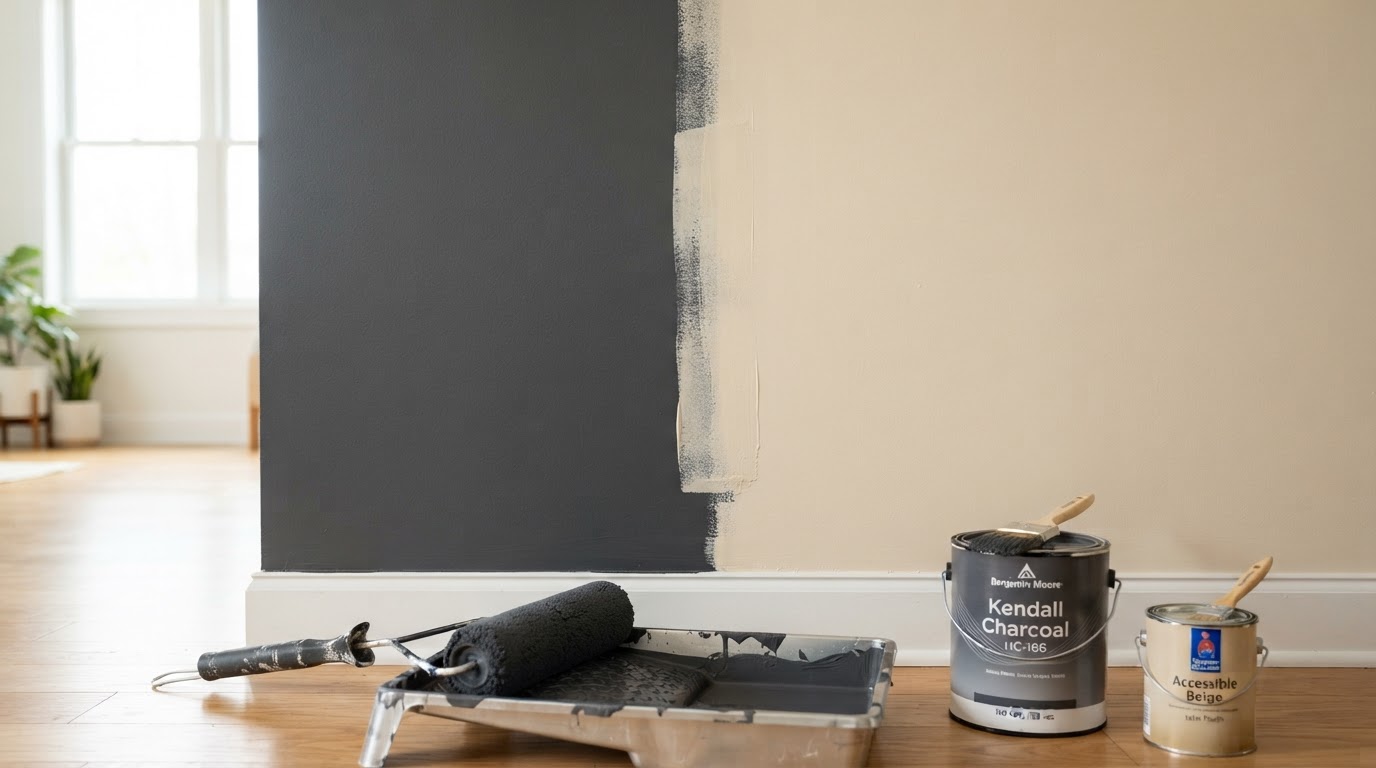
This is the biggest variable. Repainting a similar color — a white over a slightly different white — may take one coat. But covering a dark color with a light one, or a bold color with a neutral, often requires primer plus two or even three coats for full, even coverage. Dramatic changes simply need more paint.
Paint Quality and Coverage
Higher-quality paints often have better coverage — more pigment and better binders — which can reduce the number of coats needed. Cheap paints may require extra coats to achieve the same coverage, which can end up costing more in labor and material. Quality affects both the number of coats and the durability of the result.
Planning a Painting Project?
An experienced painter can tell you exactly how many coats your project needs after seeing the surfaces and colors. Get a free estimate from Paint the Town.
Primer's Role
Primer isn't a coat of finish paint, but it's a necessary step in many projects — over bare surfaces, repairs, stains, or dramatic color changes. Primer promotes adhesion and creates a uniform base so the finish coats cover evenly. Skipping primer where it's needed often means more finish coats and a less durable result.
Application Method
How paint is applied affects coverage. Even, consistent application with the right roller nap and technique distributes paint uniformly. Uneven application can leave thin spots that look like they need another coat when the issue was really technique.
A Practical Guideline
- Similar color, good surface: 1–2 coats
- Color change, good surface: 2 coats (primer if dramatic)
- Bare or repaired surface: primer + 2 coats
- Dark over light or light over dark: primer + 2–3 coats
These are guidelines, not rules. The right number of coats is whatever produces full, even, durable coverage for your specific surfaces and colors. An experienced painter determines this by assessing the actual project.
Frequently Asked Questions
Is one coat ever enough?
Sometimes — when repainting a similar color over a good surface. But most projects need at least two coats for full, even coverage and durability. Aiming for the minimum often leads to a thin, less durable finish.
Why do I need primer if I'm using good paint?
Primer promotes adhesion and creates a uniform base, especially over bare surfaces, repairs, stains, or dramatic color changes. It helps the finish coats cover evenly and last longer. Not every wall needs it, but where it's needed, it matters.
Can I save money by using fewer coats?
Cutting coats often leads to thin, uneven coverage that's less durable and may need redoing sooner. Quality paint applied in the right number of coats is more cost-effective over time than rushing the job.